Beacons and chirp
For a while it looked as though caches would start talking to receivers. Short-range beacons arrived, a cache type was built around them, and the idea quietly settled into a niche rather than spreading.
Reference record
- What it is
- short-range radio beacon
- Range
- very short, by design
- Needs
- a compatible receiver
- Status
- niche, still used
- Checked
- 24 August 2026
The idea
A geocache is a container with information in it: a logbook, sometimes a hint, sometimes coordinates for a next stage. All of that has to be physically present, which means it can get wet, be stolen, or be replaced incorrectly by a well-meaning finder.
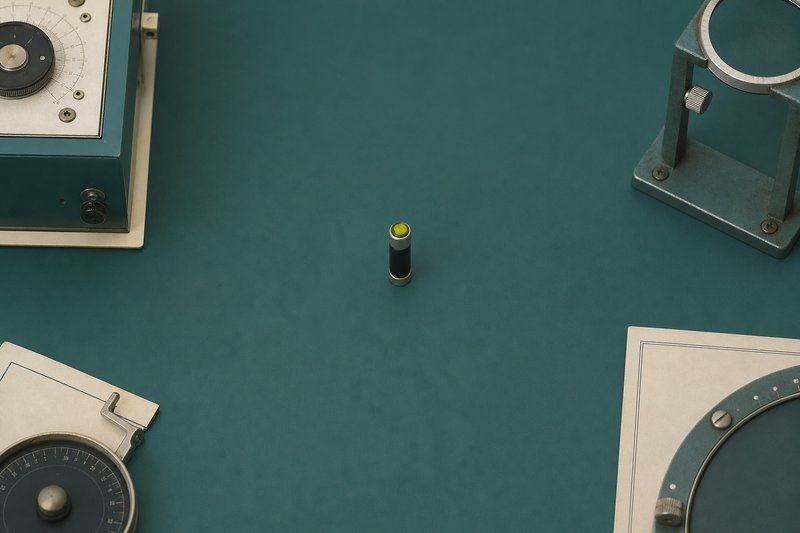
A beacon offered a different arrangement. Put a small radio transmitter at the site, store the information on it, and let a compatible receiver read it from a few metres away. The stage exists without a container. Nothing to soak, nothing to muggle, nothing to refill.
For multi-stage caches in particular this was genuinely attractive. A stage that is just information no longer needs a box hidden somewhere it will survive a winter.
Why it stayed niche
Two reasons, and the second is the decisive one.
The first is that it needed specific hardware, a receiver that speaks the right protocol. That immediately divided the community into people who could use the feature and people who could not, which is why owners were generally expected to provide another way to get the same information. A feature everyone must be able to bypass is a feature nobody must have.
The second is timing. Beacons arrived just as the hobby’s centre of gravity was moving to phones. Asking cachers to buy a particular brand of handheld to unlock a small number of caches was never going to win against a device they already owned and used for everything else.
What it looks like in practice today
Beacon-assisted caches still exist and are still placed, in small numbers, usually by owners who enjoy building complicated things.
They are best understood as a variety of puzzle rather than a category of equipment. The pleasure is not in the radio; it is in a stage that behaves unexpectedly, you arrive at what looks like nothing at all, and the information is there anyway.
What it says about geocaching technology generally
The chirp episode is a small, clean example of a pattern the hobby repeats.
Technically interesting additions arrive regularly. The ones that survive are the ones that work with what people already carry. The ones that fade are the ones that require a purchase to participate, regardless of how good the idea is.
That is not conservatism. It is a community with no membership fee and no central authority protecting the thing that makes it work: that anyone can join with whatever is in their pocket. Every proposal that quietly adds a hardware requirement runs into that, and mostly loses.
How the thing actually works
A beacon is a small sealed unit with a long-life battery, spending almost all of its existence asleep. It wakes briefly, announces itself on a short-range radio protocol, and goes back to sleep. A compatible receiver within a few metres hears that announcement and can read a small amount of data the owner stored on it.
The range is deliberately short. A beacon audible from fifty metres would defeat the purpose, the point is that you have to be at the location, which is the same requirement a physical container imposes. In practice you need to be close enough that you would already be searching.
What an owner can store is limited: a set of coordinates, a short message, a hint. That is enough for a multi-cache stage, which is why nearly every beacon in the ground belongs to one.
Why owners liked the idea
A physical stage has to be maintained. It gets wet, it gets taken, it gets put back wrong, and the owner has to travel out to fix it. Multiply that by four stages and a well-built multi-cache becomes a standing obligation that grows with its own ambition.
A beacon stage removes most of that. There is nothing to soak and nothing worth stealing. The maintenance question shrinks to whether the unit is still attached to whatever it was attached to, and whether its battery has finally run out after several years.
For anyone who has replaced the same waterlogged stage container three winters running, that is a genuinely attractive proposition, and it explains why the owners who use beacons tend to be the ones building the most elaborate caches.
What became of the caches that used one
The most useful evidence about a technology is what happened to the things built on it, and here the record is fairly clear.
Caches requiring a beacon were always a small population, concentrated in the countries where the hardware sold, and they aged badly for an ordinary reason: the cache depended on a battery in a device in the field. When that battery went, the cache stopped working in a way that no finder could diagnose and no log could distinguish from a missing container.
Owners who maintained them kept them running for years. Most did not, and the type quietly thinned out through archival rather than through any decision to retire it.
What remains is a small number of well-kept examples and an attribute on the listing that tells you one is needed. If you find one working, it is worth doing, the moment the unit picks up a transmission from an object you cannot see is the whole appeal, and it is genuinely unlike anything else in the hobby.
Questions people actually ask
What is a chirp in geocaching?
A small battery-powered radio beacon placed at or near a cache. A compatible receiver picks it up at short range and can read information the owner stored on it: often coordinates for the next stage of a multi-cache, or a hint.
Do I need one to find caches?
Almost never. Beacon-assisted caches are a small minority and owners are generally required to provide an alternative route to the information, so a cacher without a compatible receiver is not locked out.
Why did beacons not catch on?
They required specific hardware at a moment when the hobby was moving decisively toward phones. A feature that needs a particular brand of handheld cannot become the norm in a community where most people carry something else.
Are beacons still used?
Yes, in small numbers, mostly by owners building elaborate multi-stage caches who like that the beacon lets a stage exist without a physical container to maintain.
Do the batteries last?
A long time by design, the beacon spends nearly all of its life asleep. The practical maintenance issue is not the battery running down but the unit going missing along with whatever it was attached to.
Checked 24 August 2026