Containers that last
The container is the only part of a cache that has to survive unattended for years. Most of what decides whether it does is the seal and the setting, not the box.
Reference record
- Decisive part
- the seal
- Worst enemy
- freeze–thaw
- Log protection
- double, always
- Rule of thumb
- biggest the site allows
- Checked
- 24 August 2026
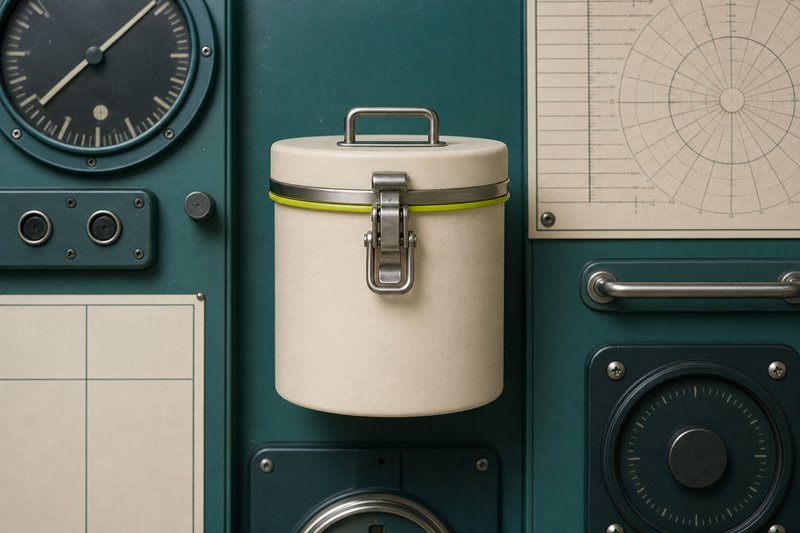
The seal is the cache
Everything else about a container is preference. The seal is the part that determines whether the thing is still usable in three winters.
The failure mode people expect is rain getting in through a gap. The one that actually happens is slower and more insidious: air inside the container expands when it warms and contracts when it cools, and each cycle draws a little damp air past a lid that is snug but not sealed. Over a season that is enough to soak a logbook without a single drop of rain having entered.
What prevents it is a gasket that stays flexible when cold. Rigid plastic pressed against rigid plastic is not a seal; it is a good fit, and a good fit is not enough through a freeze.
This is why old ammunition boxes acquired their reputation. They are heavy, ugly and conspicuous — and the rubber seal on a properly closed one keeps working for decades. Where one is appropriate, it is very hard to beat.
Size: the honest rule
Use the largest container the location can take without giving itself away.
The reasoning is not sentimentality about trade items. Bigger containers hold better seals, take a proper logbook rather than a curl of paper, tolerate a wet season without becoming unusable, and give finders a reason to feel the walk was worth it.
Micros exist for the places where nothing else works: dense urban settings, sites where anything larger would be found and removed within a week, places where a hide has to be genuinely tiny to exist at all. Used there, they are the right tool.
The complaint the community has about micros is not about size. It is about a micro in a large wood where a proper box would have been better for everyone, chosen because it was easier to carry.
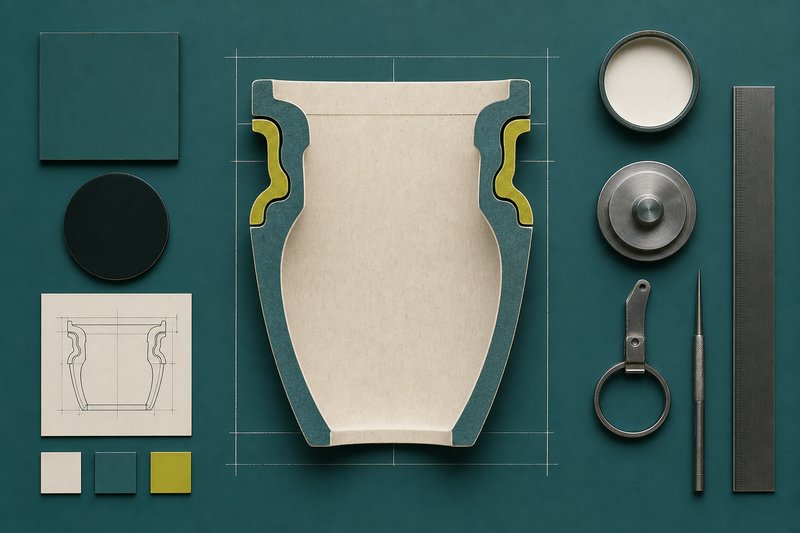
Protect the log separately
Assume the container will eventually admit water. Design for that rather than against it.
The log goes in its own sealed bag, inside the sealed container. It costs nothing and it converts the worst realistic outcome from “every signature since 2019 is gone” into “the box needs drying out”.
Include a spare pencil rather than a pen, pens fail in cold and wet, and a cache where nobody can sign is functionally missing.
Placement decides more than the box
Two containers of identical quality, one under an overhang and one in a hollow where water collects, have completely different lifespans.
Look at where water goes when it rains. Look at what the spot will be like in February rather than in the June afternoon when you are placing it. Look at whether the container sits in something that holds damp: leaf litter, moss, a hollow in a wall.
An adequate container in a dry spot beats an excellent one in a sump, every time.
Maintenance, briefly
The logs are your instrument panel. Damp log, full log, cracked lid, several people reporting a hard find where it used to be easy: all of them mean go and look.
A cache is not a thing you place. It is a thing you keep.
Winter is the test, not rain
Owners tend to design against rain, which is the visible enemy. The one that actually destroys containers is the freeze–thaw cycle, which is invisible and relentless.
A container that survives a summer downpour untouched can be full of water by March, having never once been rained into, drawn in a few cubic centimetres at a time as the air inside expanded and contracted across dozens of cold nights.
The containers that reliably fail
It is quicker to learn this from other people’s archived caches than from your own, so the list is worth stating plainly.
Food packaging. Sandwich boxes and takeaway tubs have lids designed to be opened easily and sealed adequately for an afternoon in a fridge. Outdoors they warp, the lid stops meeting the rim, and the cache is wet within a season.
Screw-top jars. Glass breaks, and the metal lids rust into place or rust through. A cacher who cannot open the container logs a DNF on a cache that is sitting in front of them.
Anything cardboard, wooden or fabric-lined. All three hold water rather than shedding it, and all three grow things.
Zip bags used as the container. A bag is a second line of defence for the logbook. It is not a container, and it punctures on the first sharp edge it is pressed against.
The pattern is consistent: containers designed for indoor use fail outdoors, and they fail through the seal rather than the body.
Cold, heat and the seal
Wet is what gets blamed and temperature is what actually does the damage.
A gasket works by being compressed. Repeated freezing hardens rubber, and repeated summer heat in direct sun makes it brittle and then permanently deformed. After two or three years of that cycle the seal no longer springs back, and the container fails on a dry day with nothing visibly wrong with it.
This is why a cache can be sound for two winters and soaked in the third, and why the useful maintenance question is the age of the seal rather than the weather since your last visit. A spare gasket costs almost nothing and turns a container replacement into a two-minute job at the hide.
Placement helps too, and an unlabelled container in the wrong place causes a different problem entirely. Out of direct sun, off the ground, and where water runs past rather than collects buys years: considerably more than upgrading to a more expensive box and putting it somewhere wet.
Questions people actually ask
What is the best geocache container?
The largest one the location can hold without being obvious, with a seal that survives a freeze. Beyond that the specifics matter less than people think, a well-sealed modest box in a sensible spot outlasts an expensive one wedged where water collects.
Why do containers fill with water?
Usually the seal, and usually because of temperature rather than rain. Air inside expands and contracts, and a lid that is merely snug breathes moisture in over months. A gasket that stays flexible in cold is what prevents it.
Should I protect the logbook separately?
Yes. Assume the container will eventually let water in and put the log in its own sealed bag inside. This single habit is the difference between a wet cache that needs a new log and a wet cache that lost every signature since 2019.
Are micro containers a bad idea?
Not inherently. They are the right answer where nothing larger survives or fits. They are the wrong answer where a proper container would have worked and the owner chose the small one for convenience. That is what people are complaining about when they complain about micros.
How often should I check my cache?
Let the logs tell you, and go when they do. Mentions of a damp log, a full log, a cracked lid or a hard find are all maintenance signals. A cache nobody has logged in a year deserves a visit regardless.
Checked 24 August 2026