Testing gear before a long hike
A long caching day is the wrong place to learn how your gear behaves. The fix is unglamorous: test the phone, the power and the boots on a short walk first, and take only what has passed.
Reference record
- Test walk
- half the distance, full pack
- Phone
- battery, offline maps, listings
- Power
- bank and cable, timed
- Boots
- worn in, never new
- Checked
- 20 October 2026
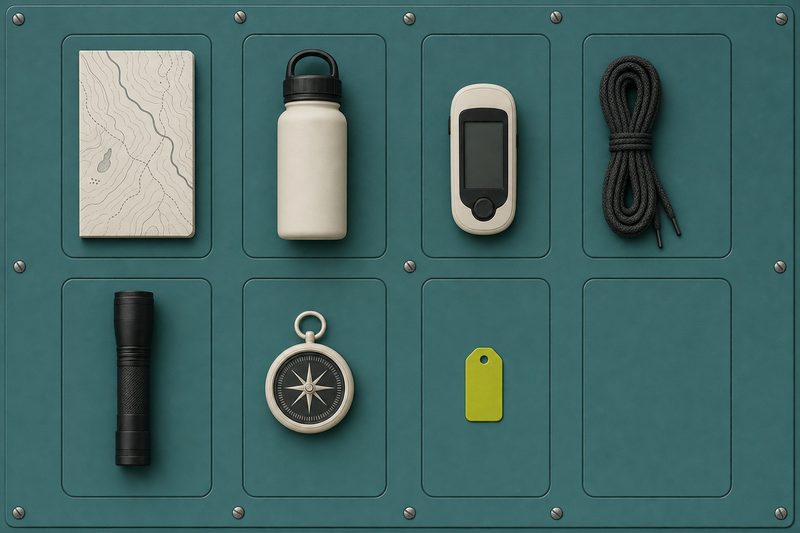
Why the first long day is different
Most people come to geocaching through short outings: a park, a town trail, a handful of caches within a mile of the car. Gear barely matters on those days. If something fails, you walk back and the worst outcome is a missed find.
The first long hike changes that arithmetic. A route of fifteen or twenty kilometres with caches scattered along it puts you hours from the car and, often, out of signal. Equipment that was merely convenient becomes the thing you are relying on, and the first time you discover how it behaves under load should not be halfway up a hill with the light going.
The answer is not more gear. It is knowing, before you set off, exactly what the gear you already own will do.
The phone is the first thing to test
For most cachers the phone is the map, the compass, the listing, the logbook, the torch and the telephone. That makes it the single point of failure, and it deserves the most honest test.
Run it flat on purpose. Charge it fully, start the caching app with navigation running, and note how long the battery lasts on a normal walk. Most people are surprised by the answer, and colder weather makes it worse. Whatever figure you get, assume the real day will be shorter.
Check offline maps work offline. Download the area, switch to flight mode at home, and try to navigate to a cache from the listing. If anything fails to load, you have found the problem in your kitchen rather than on a ridge.
Load the listings before you leave. A cache page that needs signal to open is useless where there is none. Save every listing on the route, including hints and recent logs, and confirm they open with data switched off.
If you are weighing a dedicated device for days like this, the trade-offs are set out in the handheld versus phone comparison, but a phone that has been tested properly covers most first long hikes.
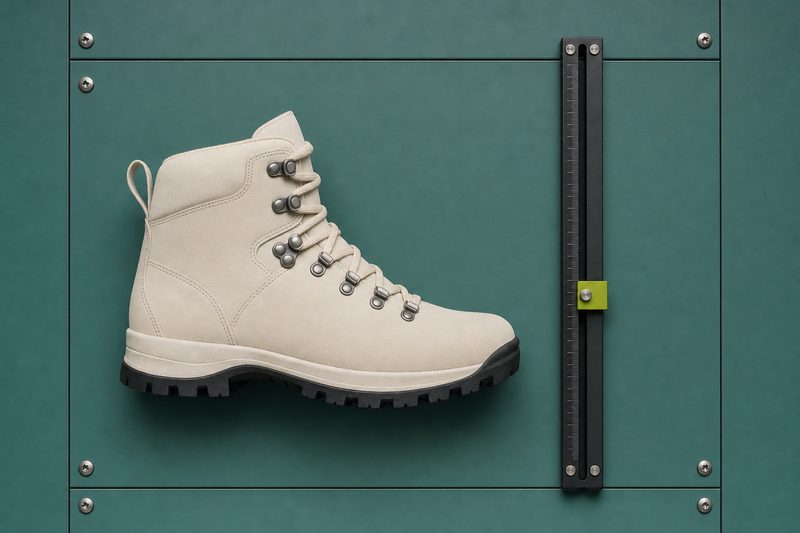
Power, and the power bank
A power bank is the most common answer to battery anxiety and the most commonly untested item in a pack.
Charge it, then use it to charge the phone from flat, and time it. Check the cable as well as the bank; a cable that only works at a certain angle will find that angle impossible to hold while walking. Know roughly how many full charges you get, and whether the bank itself loses capacity in the cold.
If a handheld GPS is part of the kit, the same logic applies to its batteries. Fit fresh cells, run it for a full day around home, and carry a spare set that you have checked are actually charged rather than taken from a drawer.
Boots, pack and the small things
Gear for a long hike fails in two ways: suddenly, which is rare, and gradually, which is common. A boot that rubs at kilometre twelve is a gradual failure, and it only reveals itself on a walk of twelve kilometres or more.
So the test walk has to be a real one. Wear the boots and socks you intend to wear, carry the pack loaded with what you intend to carry, and walk for most of a day. Note anything that rubs, slips, digs or rattles. Pack straps that seem fine for an hour can be miserable for six.
Then check the small things that geocaching adds to an ordinary hiking kit: a pen that writes when damp, a pencil as a backup, a small bag for trade items, tweezers for nano logs, and a torch with batteries you have recently tested. None of these is dramatic. All of them are the sort of thing people discover is missing at exactly the wrong cache.
A dress rehearsal close to home
The most useful single test is a shortened version of the real day, done somewhere you can bail out easily: a local walk of half the planned distance, with the full kit, using the same app, maps and navigation you intend to rely on.
Treat it as a rehearsal rather than a practice. Navigate by the device, not by memory of the area. Let the phone run as it would on the day. At the end, write down what went wrong, however minor, and fix each item before the long walk. A list of three small faults found in a park is worth more than any amount of reading.
The rehearsal is also when to practise the parts of a long day that have nothing to do with caches: how long a stop really takes, how quickly you walk on rough ground, and how much water you drink. Those numbers set a sensible turnaround time, which is the most important safety decision of the day and the one first-timers most often skip.
Trusting only what has been checked
Behind all of this is a simple rule: on a long day, rely only on what you have personally tested, and treat everything else as unverified until it has earned its place. That habit is not unique to hiking. It is the same logic as choosing between options online, where a reviewer who has worked through the checks is more useful than a long list, the way the Toronto Star's guide to safe online casinos in Canada concentrates on the ones that passed rather than everything available. In the hills the stakes are physical rather than financial, but the principle holds.
The same applies to advice. Outdoor safety bodies such as AdventureSmartUK publish plain checklists built on what rescue teams see repeatedly, and they are a better starting point than a forum thread. What rescue services wish more people had done is covered in more detail on the page about searches that go wrong.
The message before you leave
The last test is not of equipment at all. Before the first long hike, send someone the route, where you are parking and when you expect to be back, then confirm they received it.
It is the one precaution that works even when every piece of tested gear fails at once, and it matters more when you are caching on your own. Tested kit makes a long day comfortable. Somebody knowing where you are is what makes it safe.
Questions people actually ask
How long should a test walk be?
Long enough to find gradual failures, which usually means at least half the distance of the real hike with the full pack. Blisters, rubbing straps and a draining battery rarely show up in the first hour.
Is a phone enough for a long geocaching hike?
For most first long hikes, yes, provided you have tested its battery life with navigation running, downloaded offline maps and saved every listing. Carry a power bank you have also tested.
What do people most often forget?
A working pen, a light with fresh batteries, and enough water. The most common serious problem is still a flat phone that was the map, the torch and the telephone at once.
Should I buy new gear for the first long hike?
Only if testing shows something genuinely fails. New boots in particular should never make their first appearance on a long day; wear them on several shorter walks first.
What is a turnaround time?
A fixed time at which you head back regardless of how many caches remain. Set it from your rehearsal pace and daylight, and tell the person who knows your route.
Checked 20 October 2026